+ Vectibix® for KRAS G12C–mutated mCRC1,2

is the pivotal trial establishing the efficacy of LUMAKRAS®
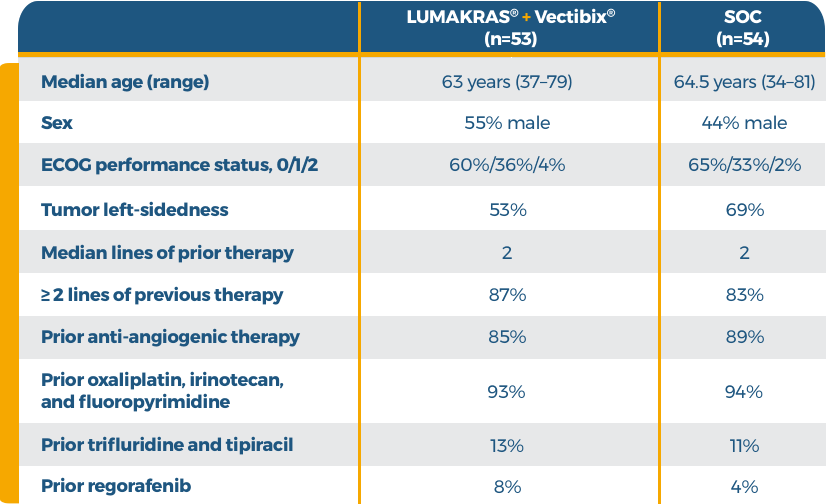
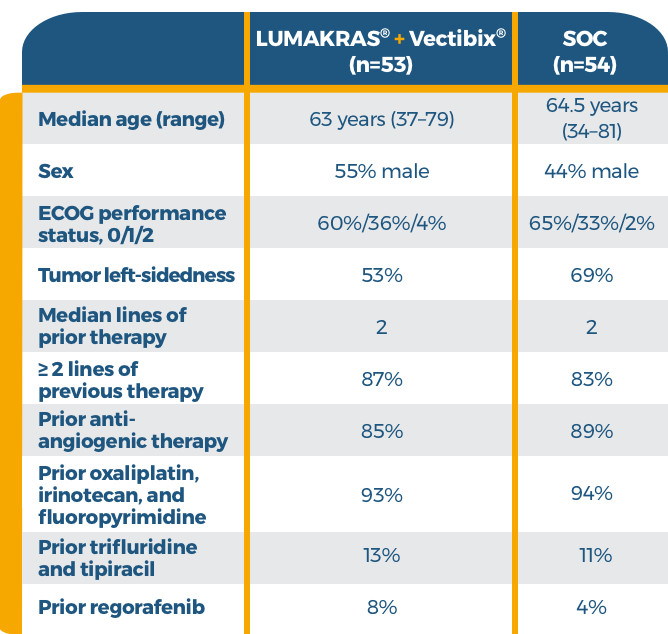
The global, Phase 3 CodeBreaK 300 study was a randomized, open-label, active-controlled, multicenter study of LUMAKRAS® + Vectibix® vs SOC (trifluridine/tipiracil or regorafenib) in chemorefractory patients1-4
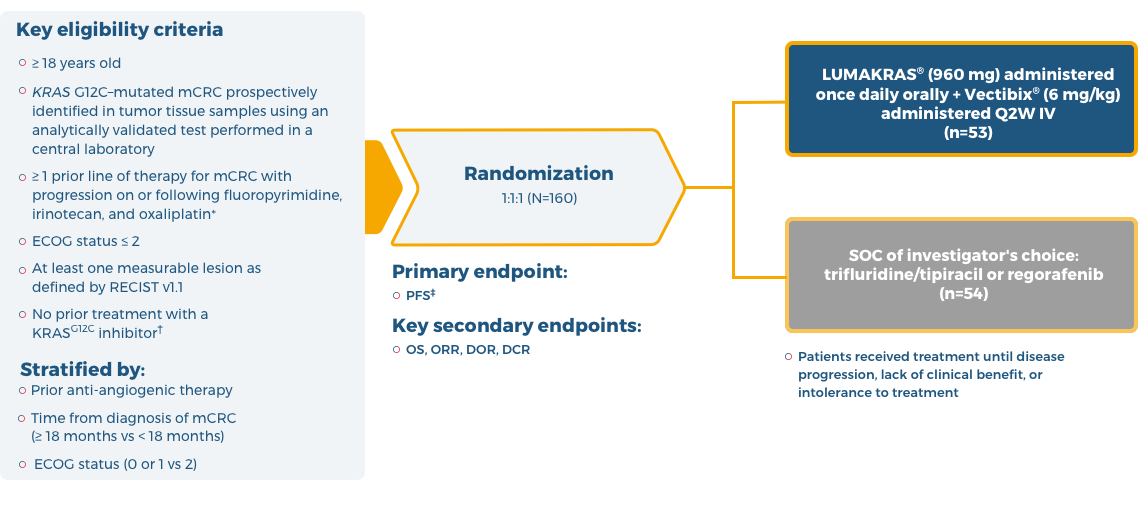
Only the results of LUMAKRAS® 960 mg + Vectibix® are described here. LUMAKRAS® 240 mg + Vectibix® was evaluated in CodeBreaK 300 but is not the recommended starting dose1,2
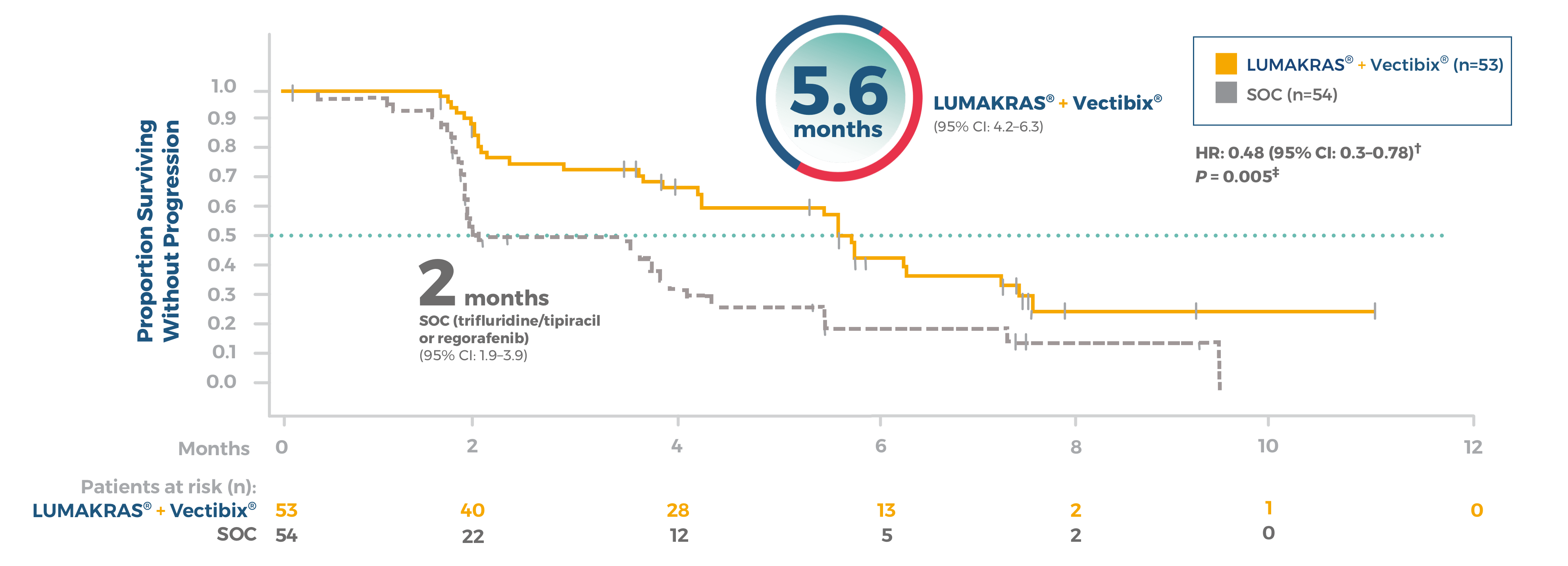
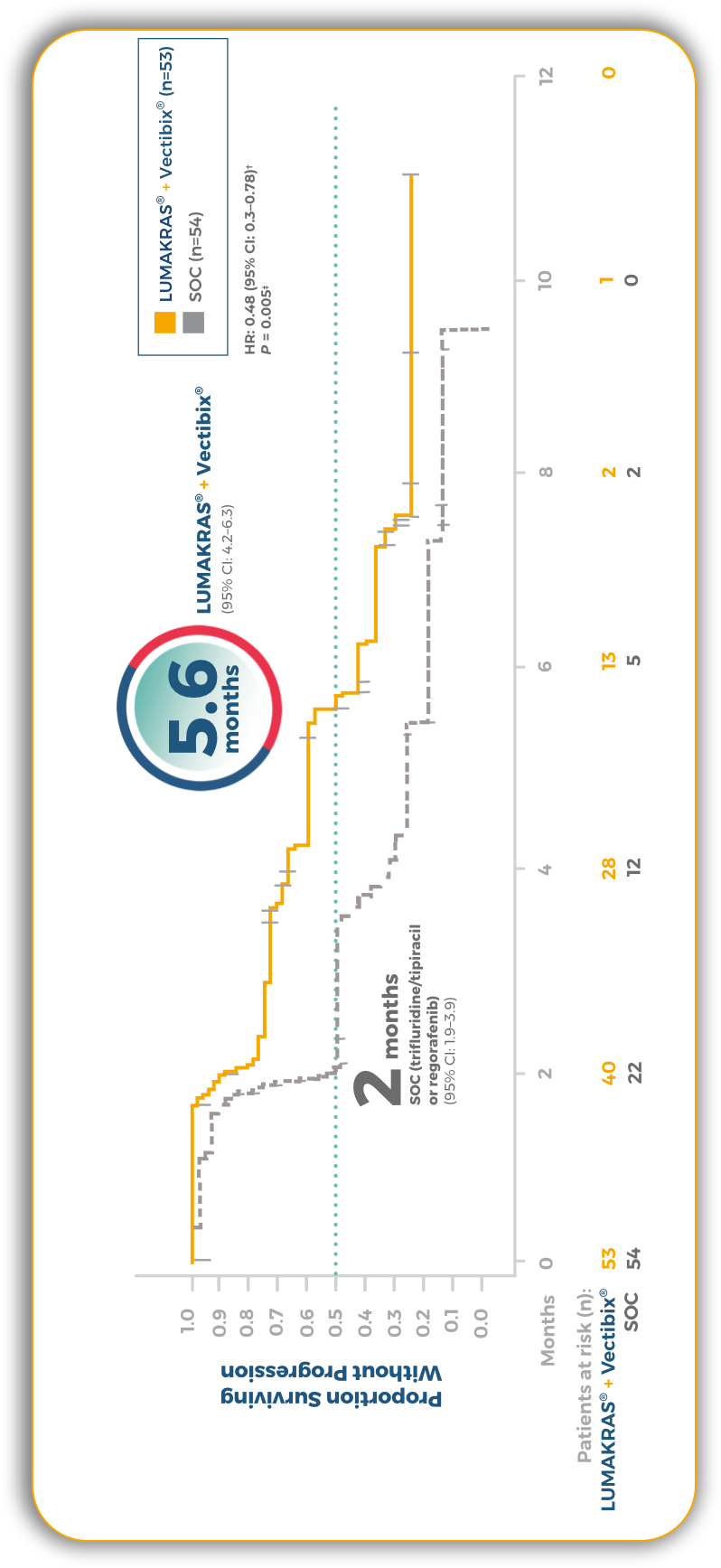
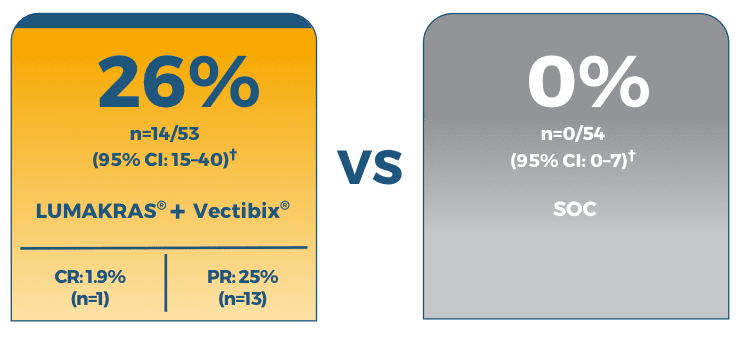
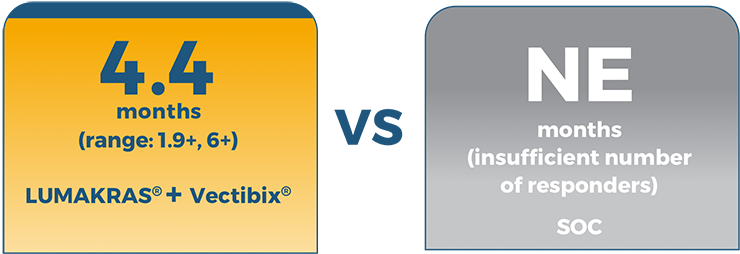
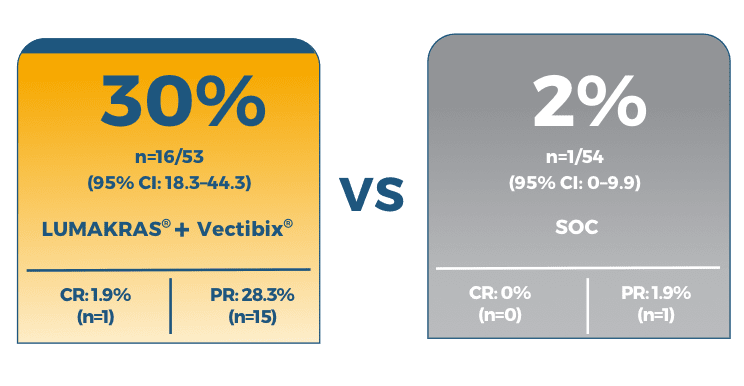
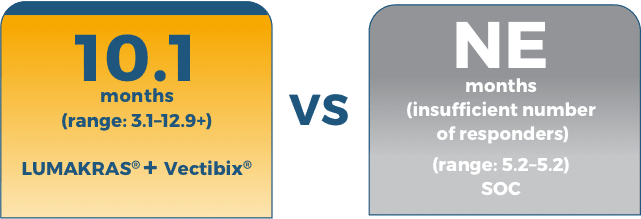
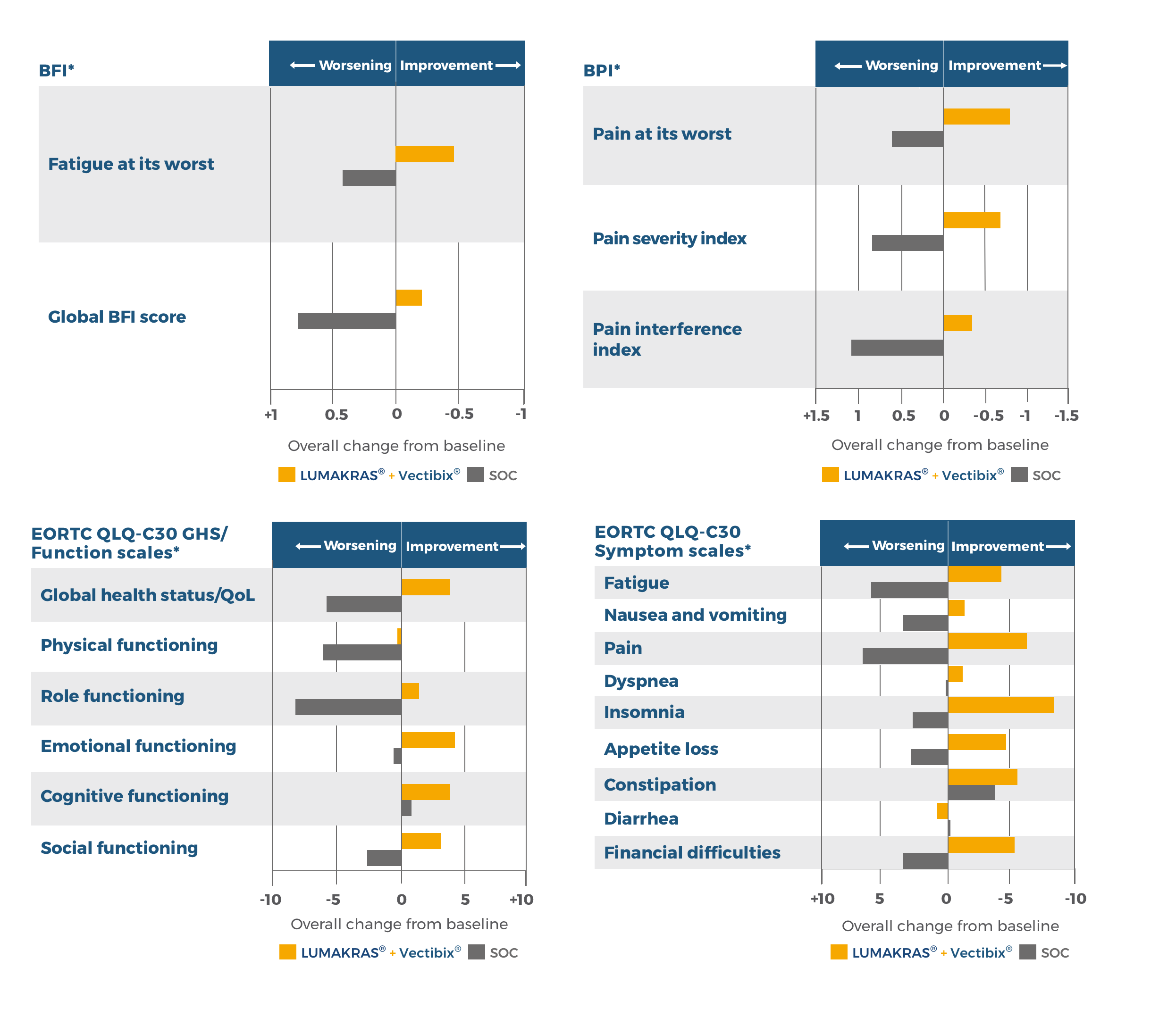
Based on the pivotal CodeBreaK 300 study, LUMAKRAS® + Vectibix® was the first regimen to demonstrate superior PFS vs SOC in KRAS G12C–mutated mCRC patients1,2,5
*
Patients deemed by the investigator not to be candidates for fluoropyrimidine, irinotecan, or oxaliplatin may still be eligible if ≥ 1 prior line of therapy was received for metastatic disease and trifluridine/tipiracil or regorafenib were deemed an appropriate next line of therapy.3
†
Where the investigator's choice would be trifluridine/tipiracil or regorafenib, patients who had been previously treated with these agents were excluded.3
‡
As determined by BICR, measured by CT or MRI, and assessed by RECIST v1.1.3
BICR, blinded independent central review; CT, computed tomography; DCR, disease control rate; DOR, duration of response; ECOG, Eastern Cooperative Oncology Group; IV, intravenous; KRAS, Kirsten rat sarcoma viral oncogene homolog; mCRC, metastatic colorectal cancer; MRI, magnetic resonance imaging; ORR, objective response rate; OS, overall survival; PFS, progression-free survival; Q2W, every 2 weeks; RECIST, Response Evaluation Criteria in Solid Tumors; SOC, standard-of-care.